
The latest in the West Wight People and Place series on the Biosphere Stories blog by Pete Johnstone. What gives an area its sense of place? The answer to this question might lie in the landscape or in the distinctive buildings of the place. Community interaction may also be important, as well as a sense of wellbeing and culture or the knowledge that people may hold for their immediate surroundings.
The strength and diversity of the local economy may also feature as well as any attachment that people hold for the area, be they visitors, recent newcomers or born and bred residents who can trace their family ties back generations.
In an attempt to answer this question, Pete Johnstone set himself a challenge and that was to find the sense of place of West Wight through photographing people living and working in the area and asking them about their connection to this largely rural area.
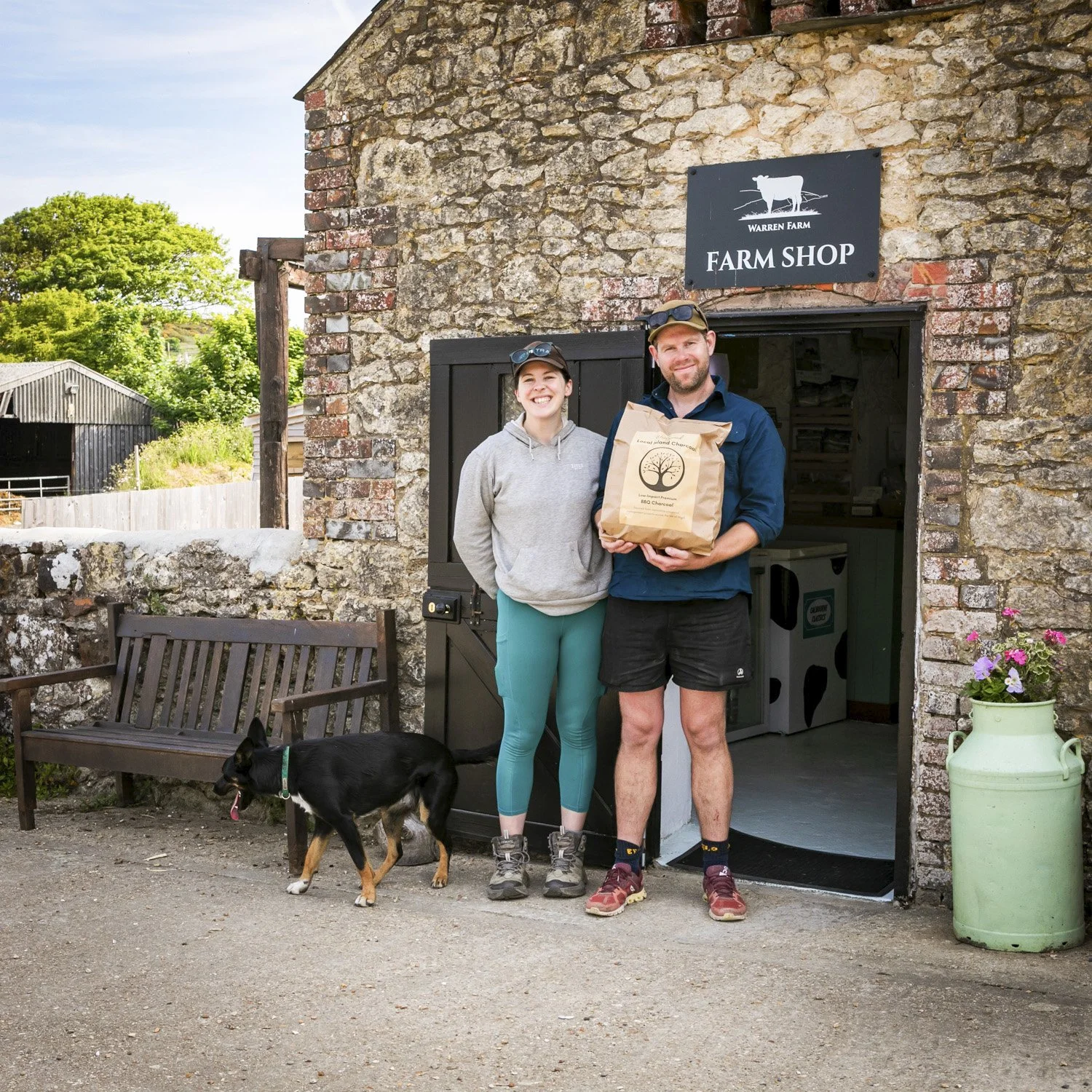
Becca and James at the Farm Shop that sells their own milk with Island produce such as charcoal.
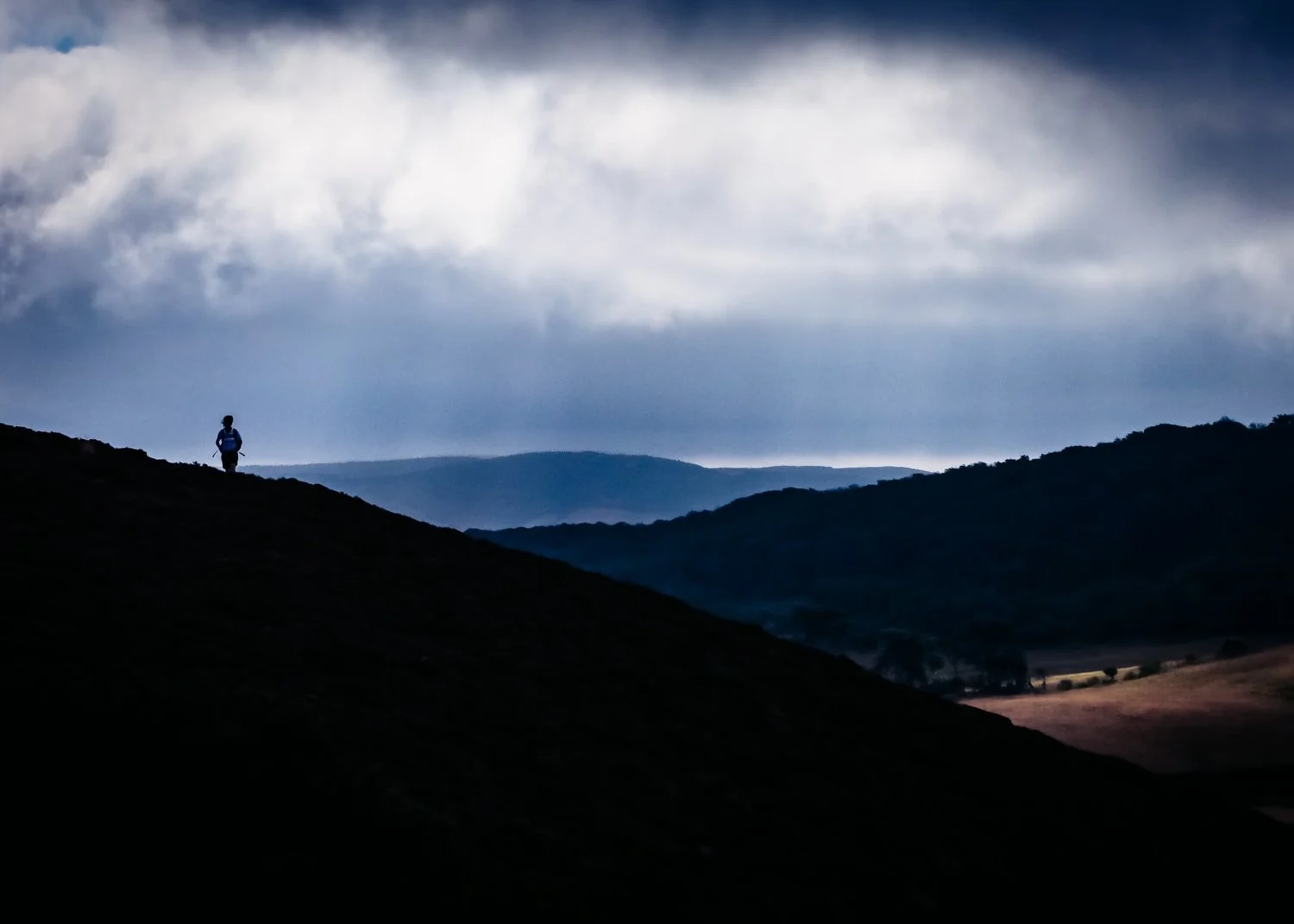
Headon Warren’s nationally recognised landscape is important for recreation in West Wight, with access via the King Charles III Coast Path, public footpaths and permissive paths.
On a grey November morning, I met James and we climbed the steep hill to the fence separating Warren Farm from Headon Warren, the heathland managed by the National Trust.
At the fence, the contrast in land management on either side was clear. James explained, “My father, John Osman, became Warren Farm’s tenant in 1965, when it belonged to the Ward Estate, which also owned Weston Manor in Totland. The field was then full of scrub, which my father had to clear before farming could begin “ - a task James felt must have been hard work. The National Trust bought the farm in 1979 and remain the landowner.
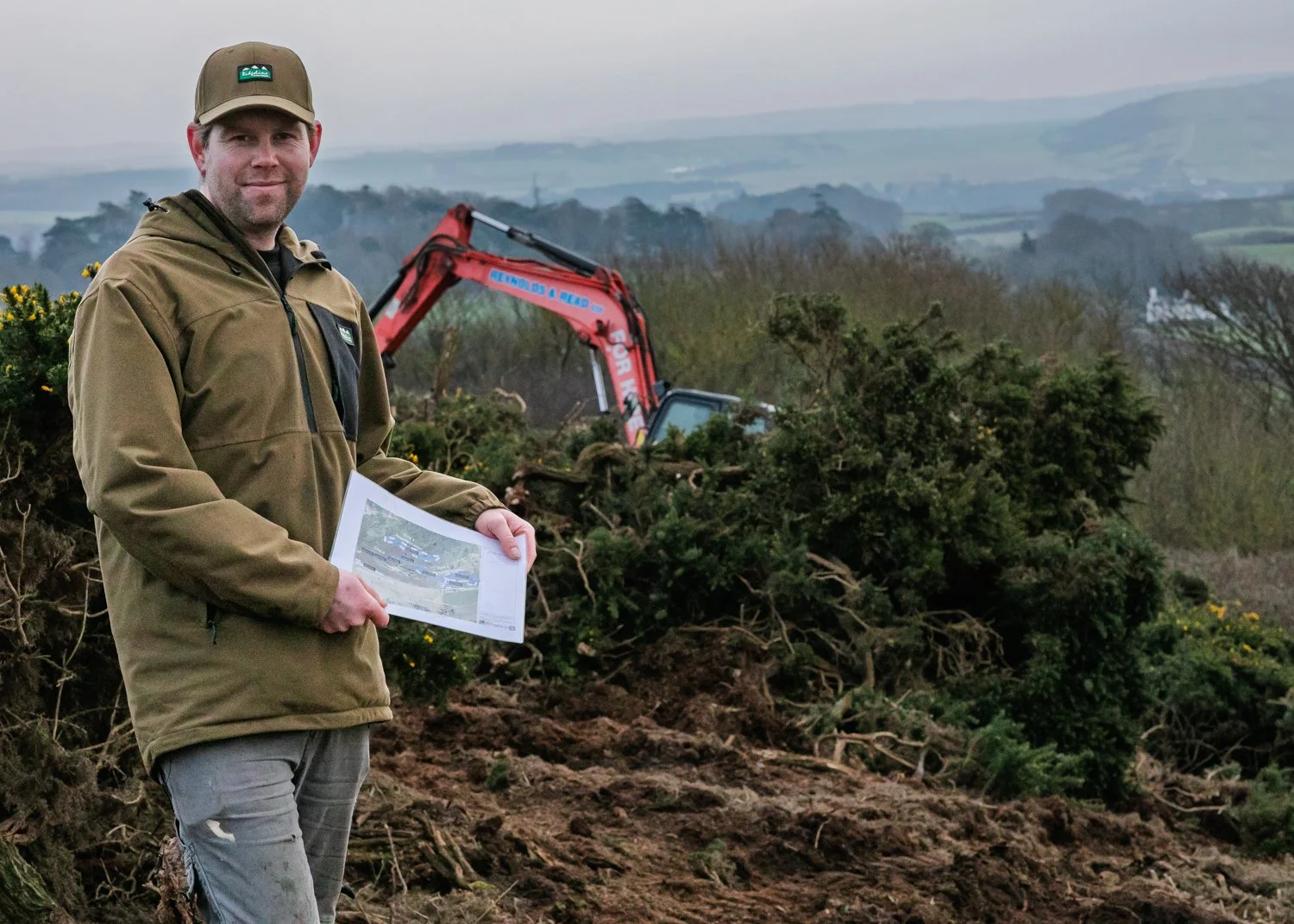
James showing the plan for the removal of some gorse on the heath, which is out competing the heather. A project supported by Natural England, National Trust and the Isle of Wight National Landscape.
To understand the nature recovery aspect of this project we must go back several decades. For many years, Warren Farm was run as a dairy farm, with much of the milk being bottled and sold locally via a milk round. However, due to the increasing unprofitability of managing small dairy herds, the milking cows were sold off in 2001 and replaced with a beef herd which remains until this day.
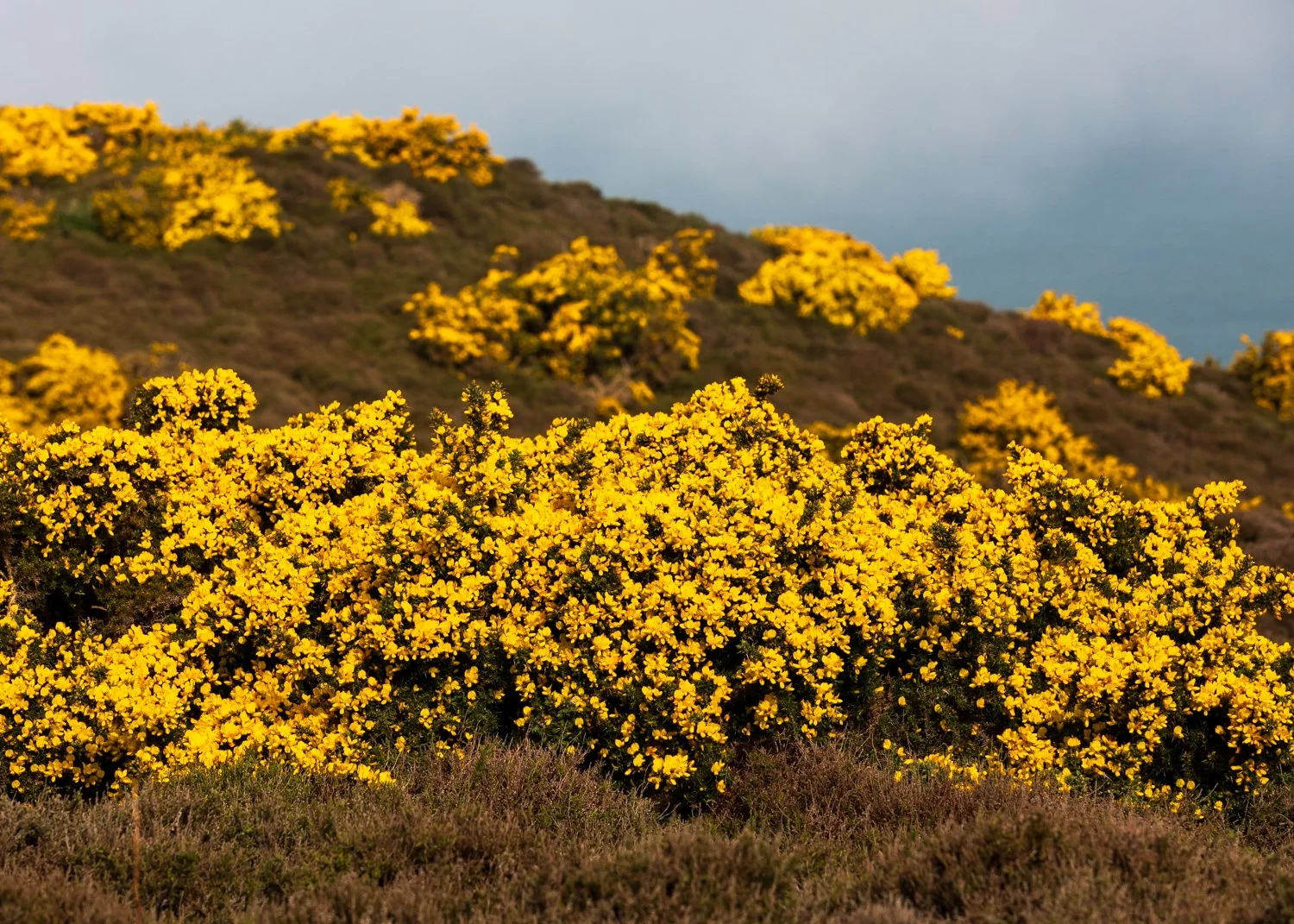
On the North side of Headon Warren looking West. Gorse in full bloom.
The farm is now being run by the next generation, with John & Liz Osman’s son James taking on the farm business, alongside his wife Becca. They have now added a flock of Herdwick sheep to the business and have established a small ‘micro dairy’ herd of Jersey cows and so after a break of 24 years, milk is once again being produced on the farm and sold through the farm shop.
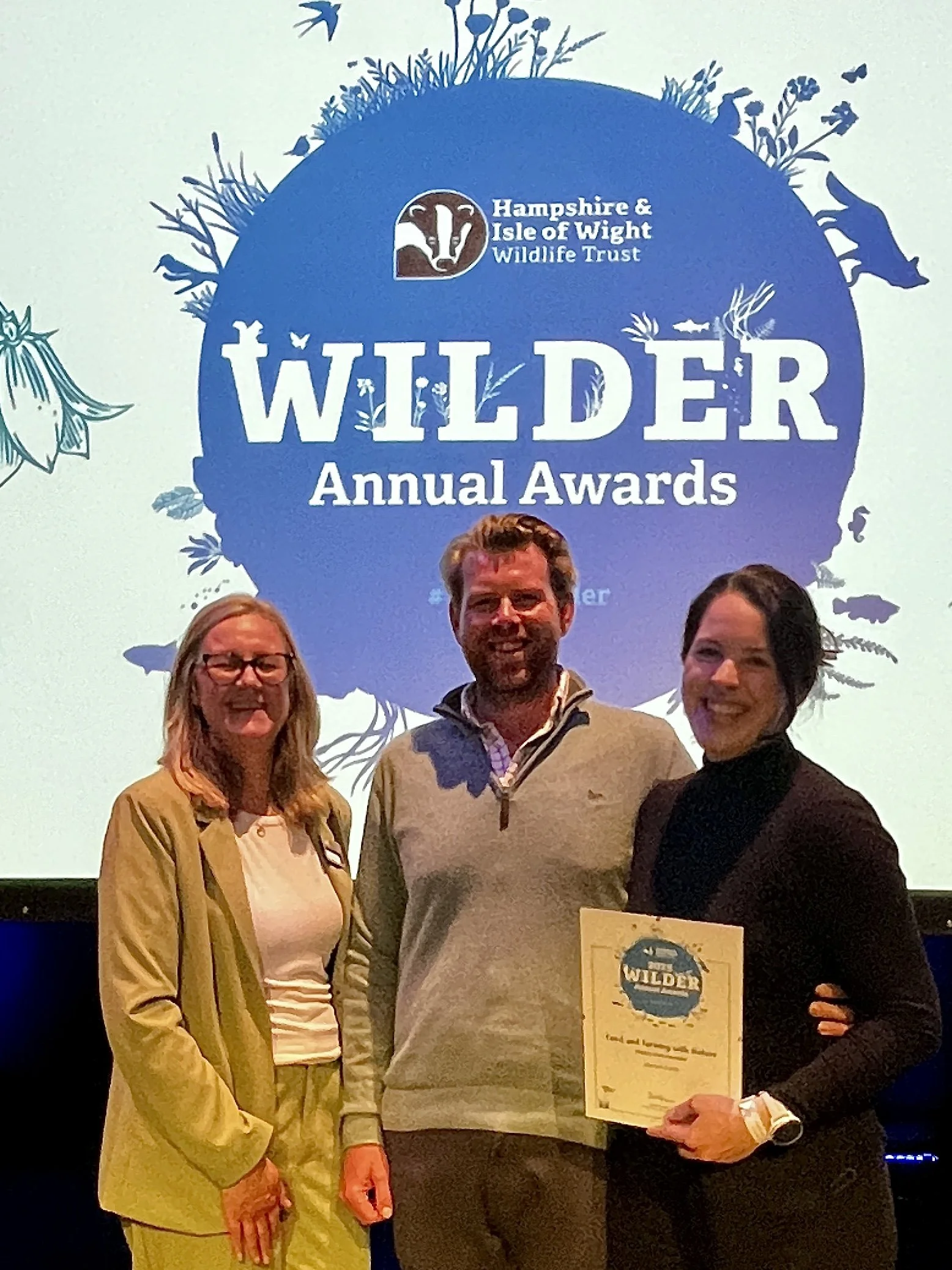
In October 2025, Warren Farm received a High Commendation award from CEO Debbie Tann MBE at the Hants and Isle of Wight Trust’s Wilder Awards Conference
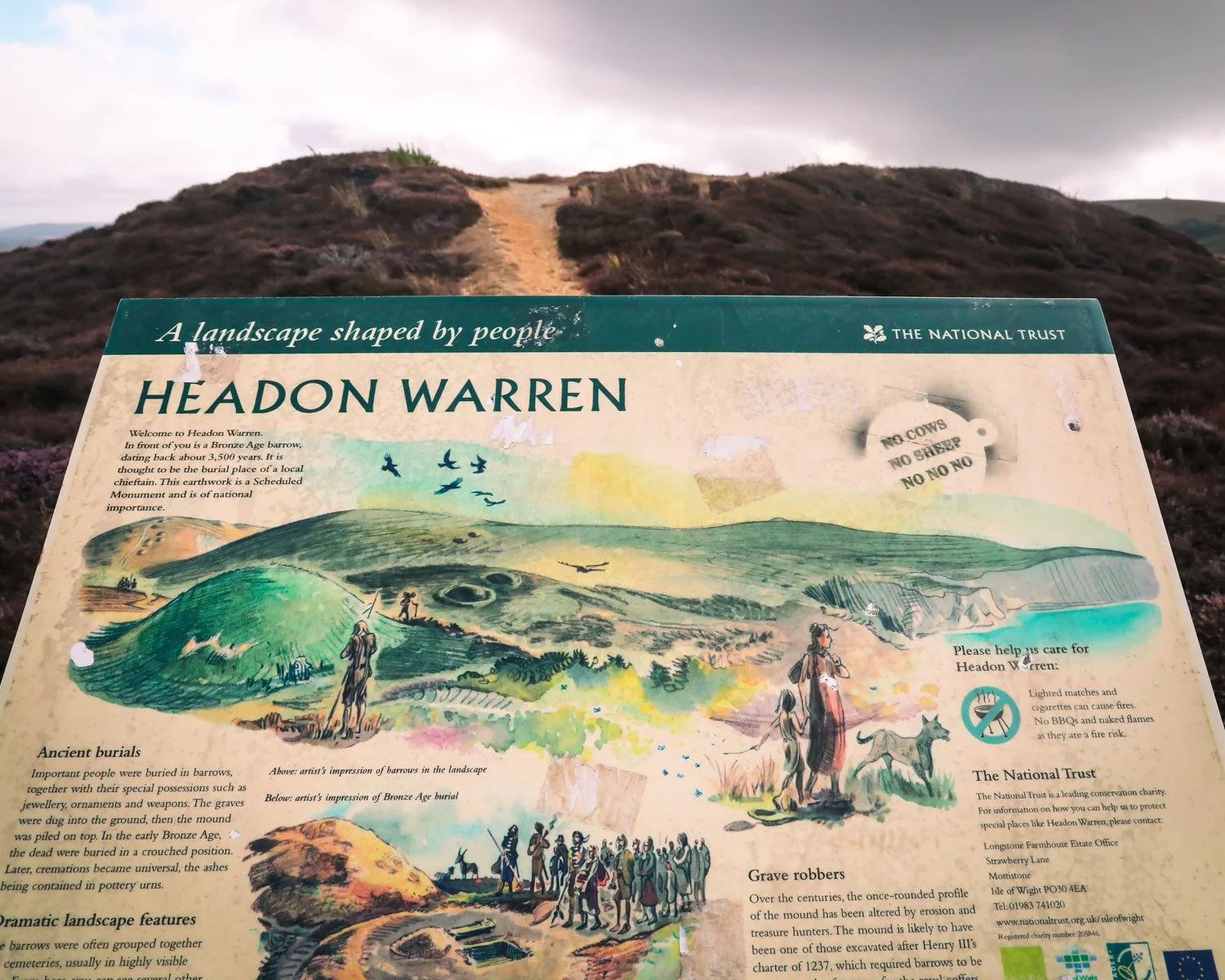
On top of Headon Hill the National Trust interpretation illustrates some of the earlier settlers to the area. The interpretation board has graffiti on it by someone who does not want to see Warren managed
James explained that “Farming has changed dramatically over the past few decades, and has been under huge pressures, from rising costs and market volatility. On the Isle of Wight these pressures are amplified even further due to the challenges of Island farming. Becca and I must view these challenges as opportunities to manage the farm differently”.
To spread the risk, James and Becca are looking to create more enterprises and add a range of farmed products which can be offered through their farm shop and direct sales to customers. James said, “We have sought to change our farming practices and have shifted away from using chemicals and artificial fertilizers on the farm. This is partly due to cost and a recognition that local consumers want to see a more natural way of farming”.
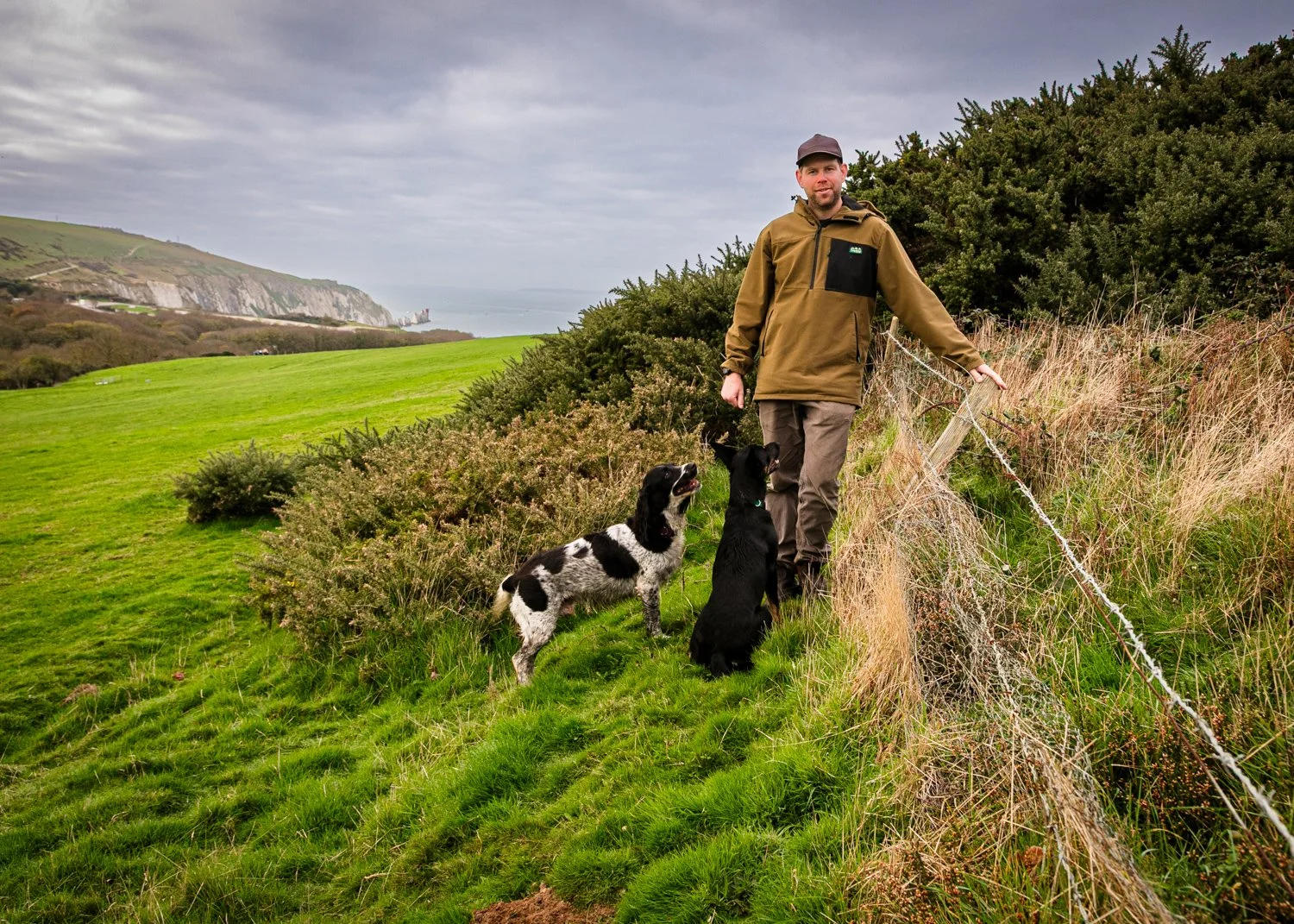
The Headon Warren Restoration project includes the removal of farm fencing, This will allow greater access to the Warren for the cattle to graze the heath.
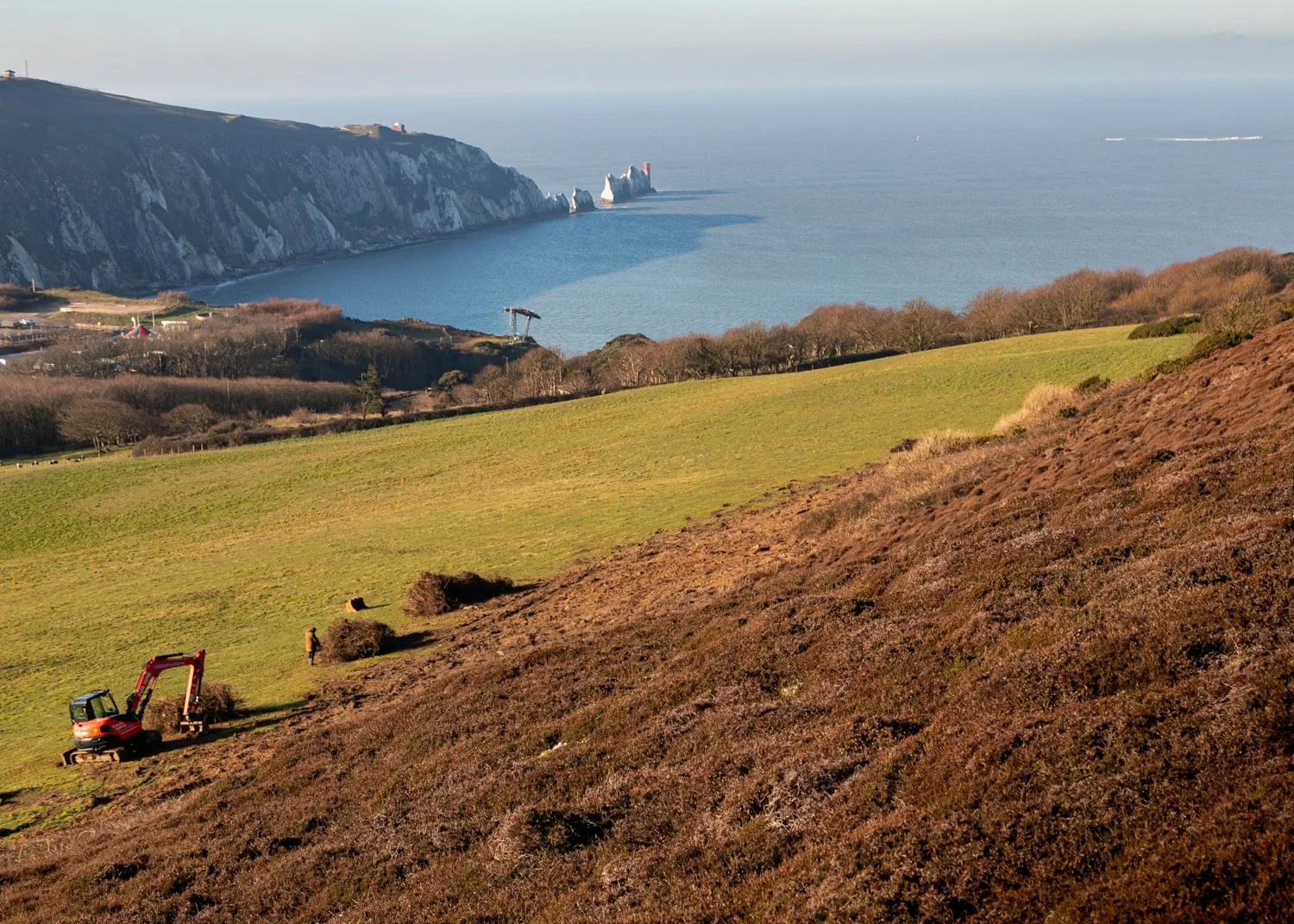
Removing the farm fencing enhances the landscape’s appearance and enables a gradual transition between heath and acid grassland.
Above Warren Farm, lies Headon Warren a heathland landscape and National Trust property, which is the largest area of heath found on the Island, part of the isle of Wight National Landscape and a Site of Special Scientific Interest (SSSI). “In a sense”, says James, “it’s a remnant ancient landscape that has never been farmed in the conventional way largely due to the nutrient poor soils, vulnerability to cliff falls on the north side and weather conditions. And being on the western tip of the island as we are, it can get a bit wet and windy up here!”
“Yet over time there has been human occupation on the Warren as seen through the Neolithic Barrow on Headon Hill and the Victorian Battery and World War 2-gun emplacements”. Now says James “the principal use of the Warren is recreational in its various forms including dog walking, wildlife watching and for people walking the coastal path. It is a popular spot and has some wonderful views of the Needles and across the Solent to the New Forest National Park”.
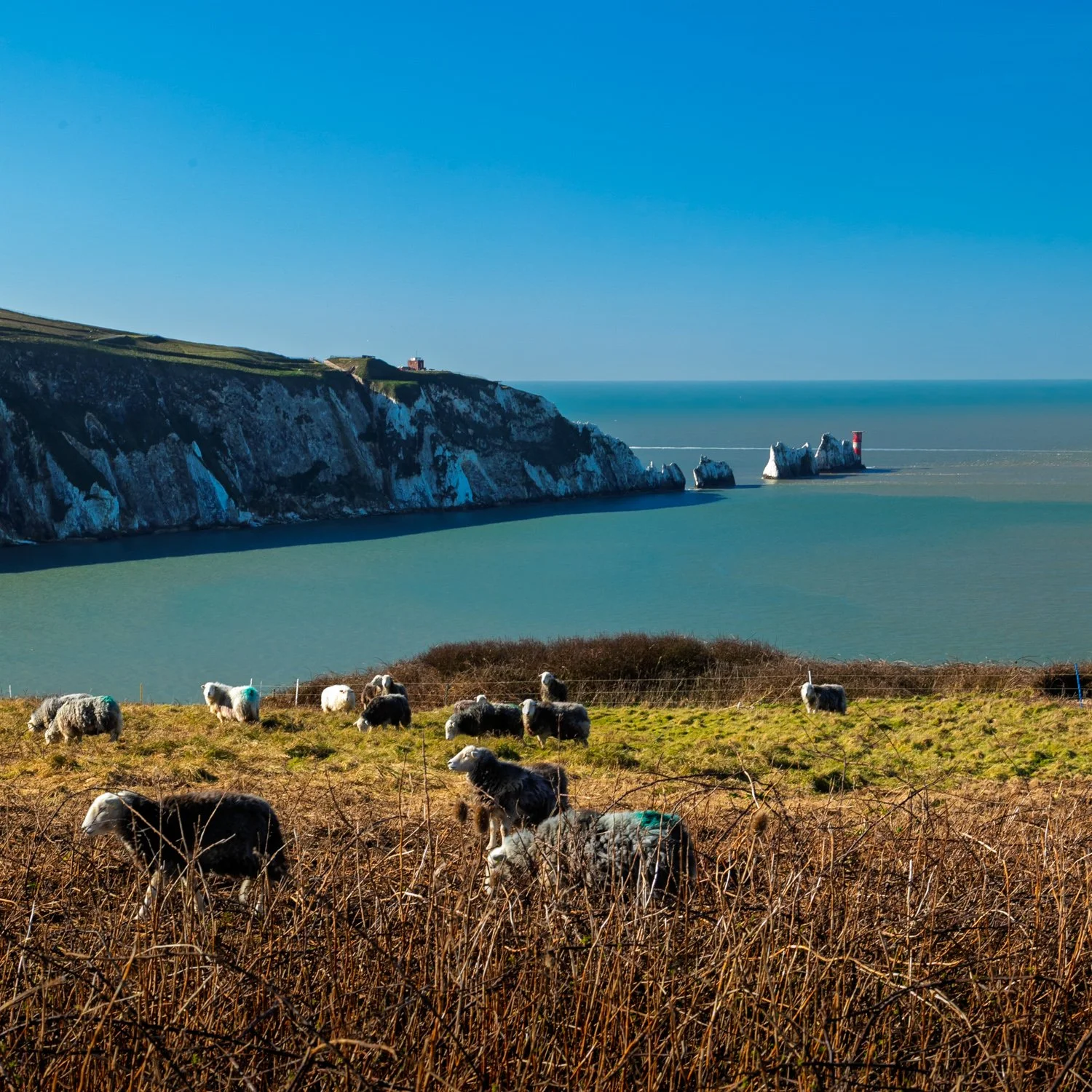
The 'pockets' of Limestone grassland on the Warren are now being grazed by the farm's hardy Herdwick sheep.
The Headon Warren restoration project was originally proposed by Natural England a few years ago. Natural England had surveyed the heathland as part of the SSSI designation and were concerned that much of the heathland was being taken over by gorse, bramble and bracken. Some areas of remaining heathland were becoming derelict and was not renewing sufficiently to maintain the habitat.
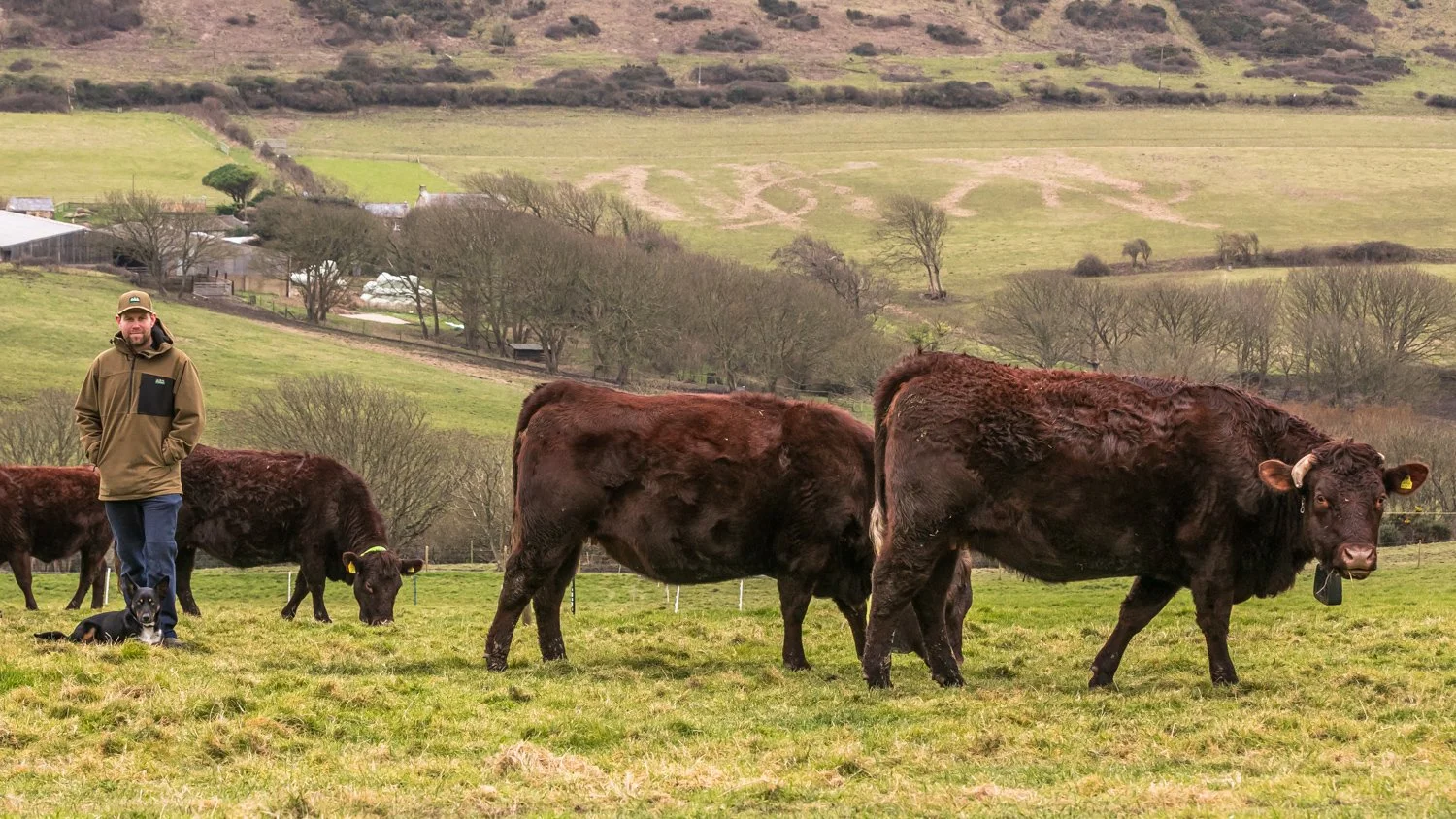
The Sussex cattle, new to the farm have been 'trained' in the use of the 'no fence' collars and will be grazing the heath at certain times of the year.
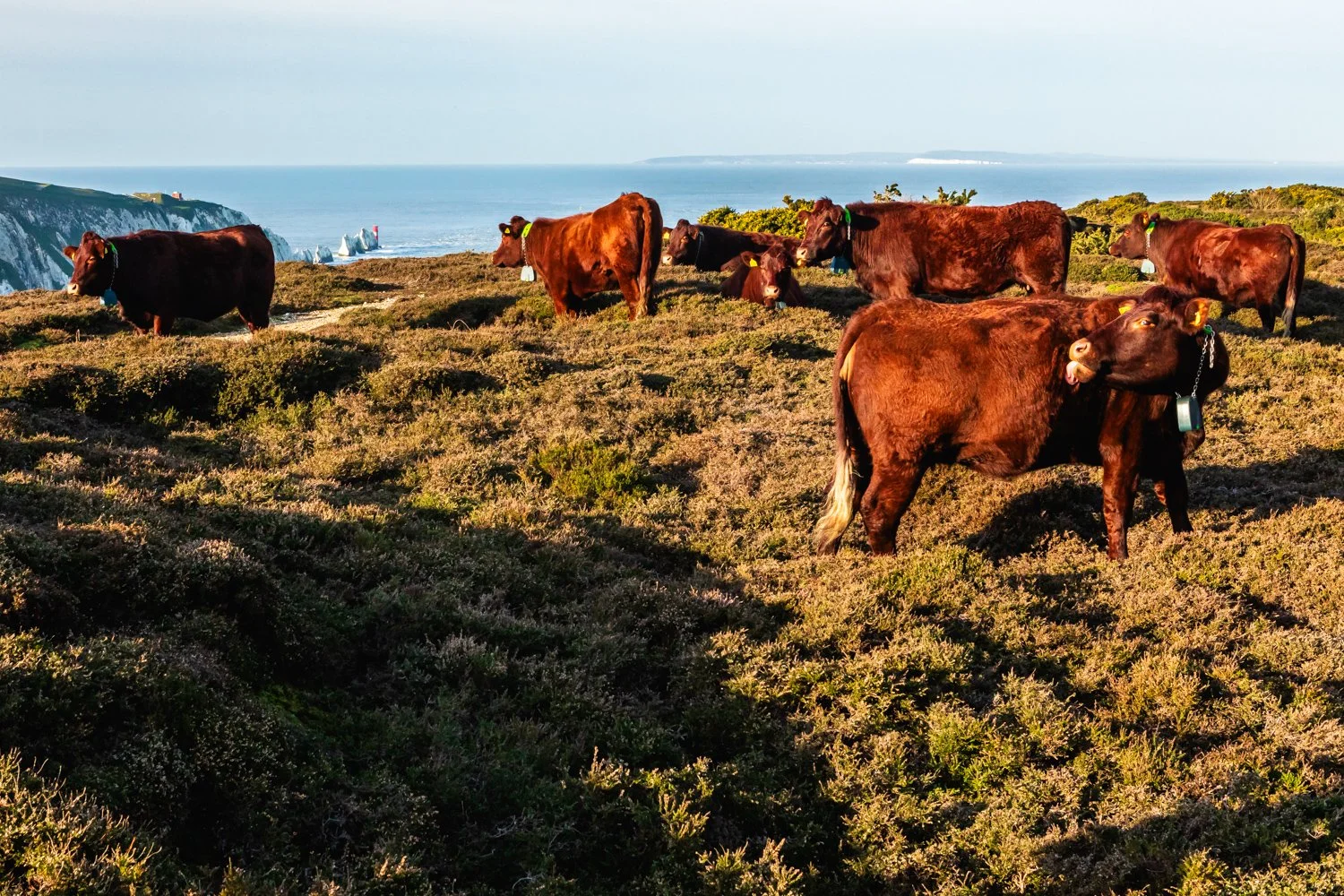
The Sussex cattle grazing contently with the 'no fence' collars keeping them confined to their designated boundary.
Between the National Trust, Natural England and Warren Farm, over the course of 2 years, a plan has been drawn up to restore Headon Warren. The reintroduction of grazing animals was seen as crucial to achieving the necessary habitat restoration, but the site is challenging to graze because of the cliffs, scrub growth, and the desire to maintain public access to the site.
To manage the rough terrain of Headon Warren, James has introduced a herd of Sussex cattle. Utilizing ‘No fence’ collar technology, the cattle graze and trample designated areas of the heath through virtual fences created by James on his iPhone. James mentioned, “We have installed signs with QR codes along the footpaths, allowing the public to scan and access a live grazing map to locate the cows on the heath.”
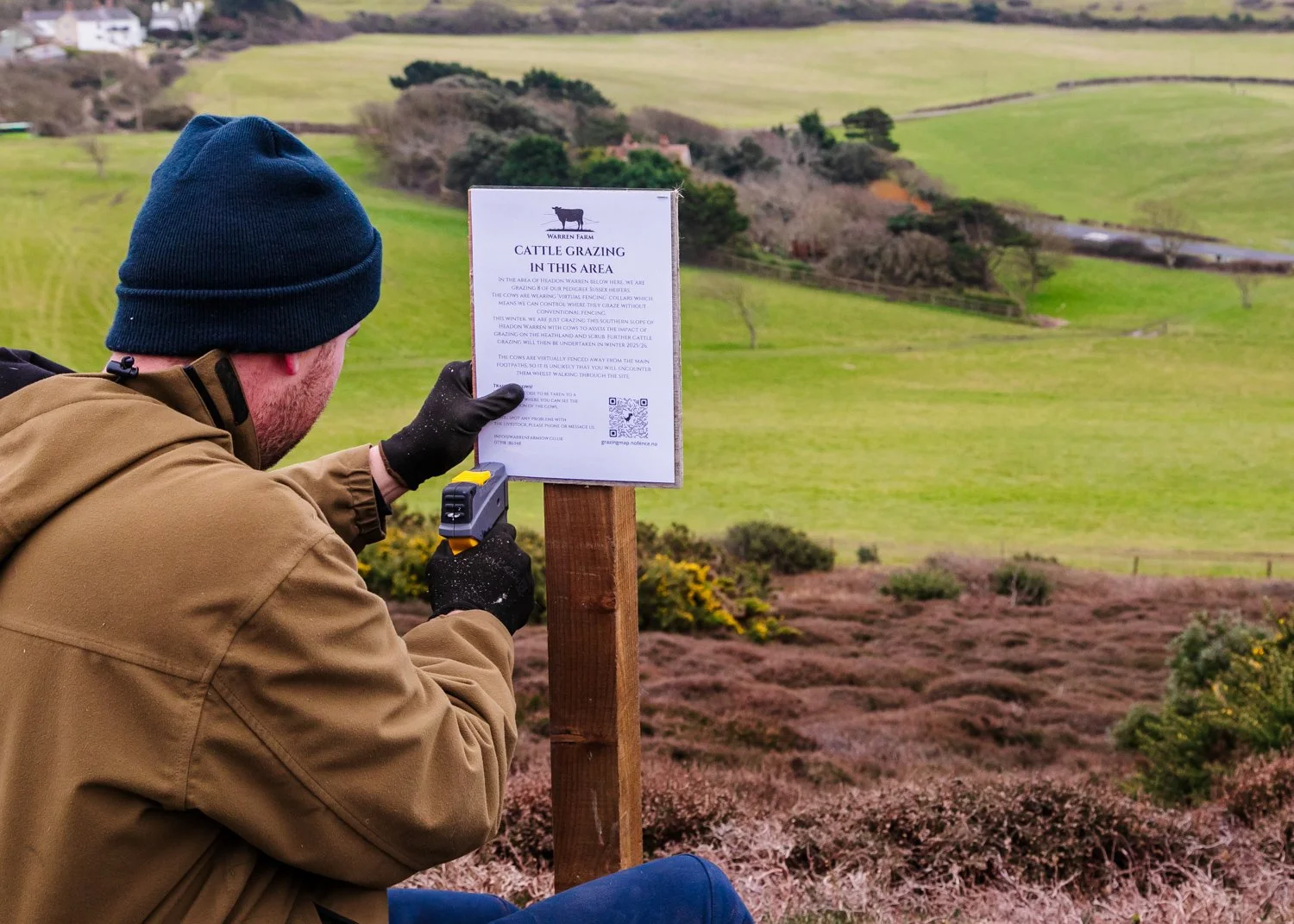
When the cattle are up on the Warren, James will put up signs to alert the public who can also find out where they are by using QR codes. February 2025.
Going forwards in the coming years it is planned that winter grazing of cattle and sheep will be managed around the site – with the cattle on the heath and the Herdwick sheep on the small pockets of Limestone grassland that are also to be found at the Alum Bay end of Headon Warren.
The art and skill in the grazing management will be to create a mosaic of habitat and a rebalancing of the scrub encroachment so that in time the landscape will be more diverse and attractive to the wildlife that can only be found on the acid heath of Headon Warren.
Postscript:
On 23 July 2026, a wildfire on Headon Warren severely damaged many hectares of heathland. Hampshire and Isle of Wight Fire and Rescue Service extinguished the fire five days later, following considerable effort by the Fire Service, local people and local businesses.
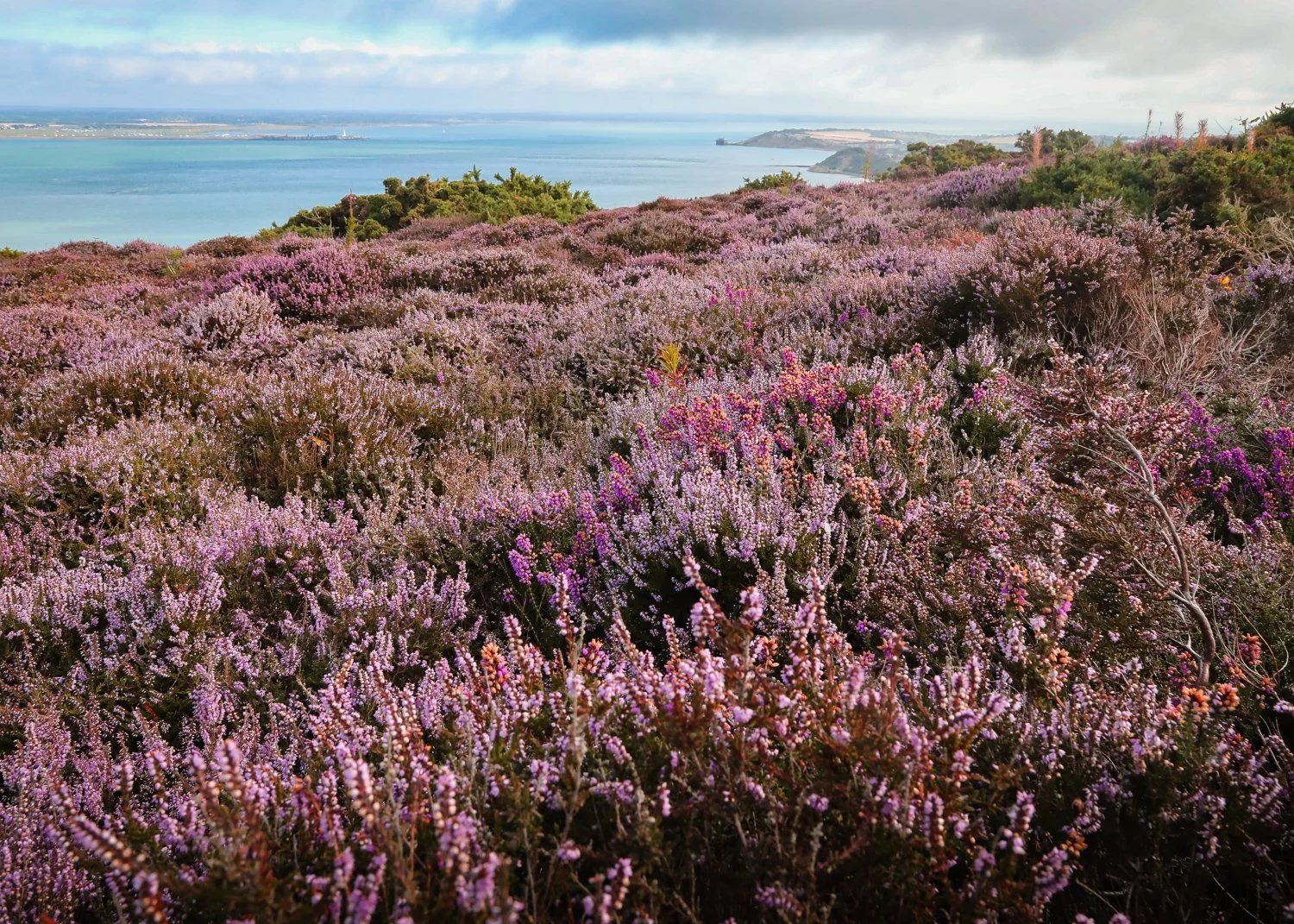
Before the fire: The heath dominated by Ling and Bell heather with some gorse. Looking East, notable landmarks are Hurst Point Lighthouse in the New Forest National Park (Top left) and Fort Albert (Top Right)
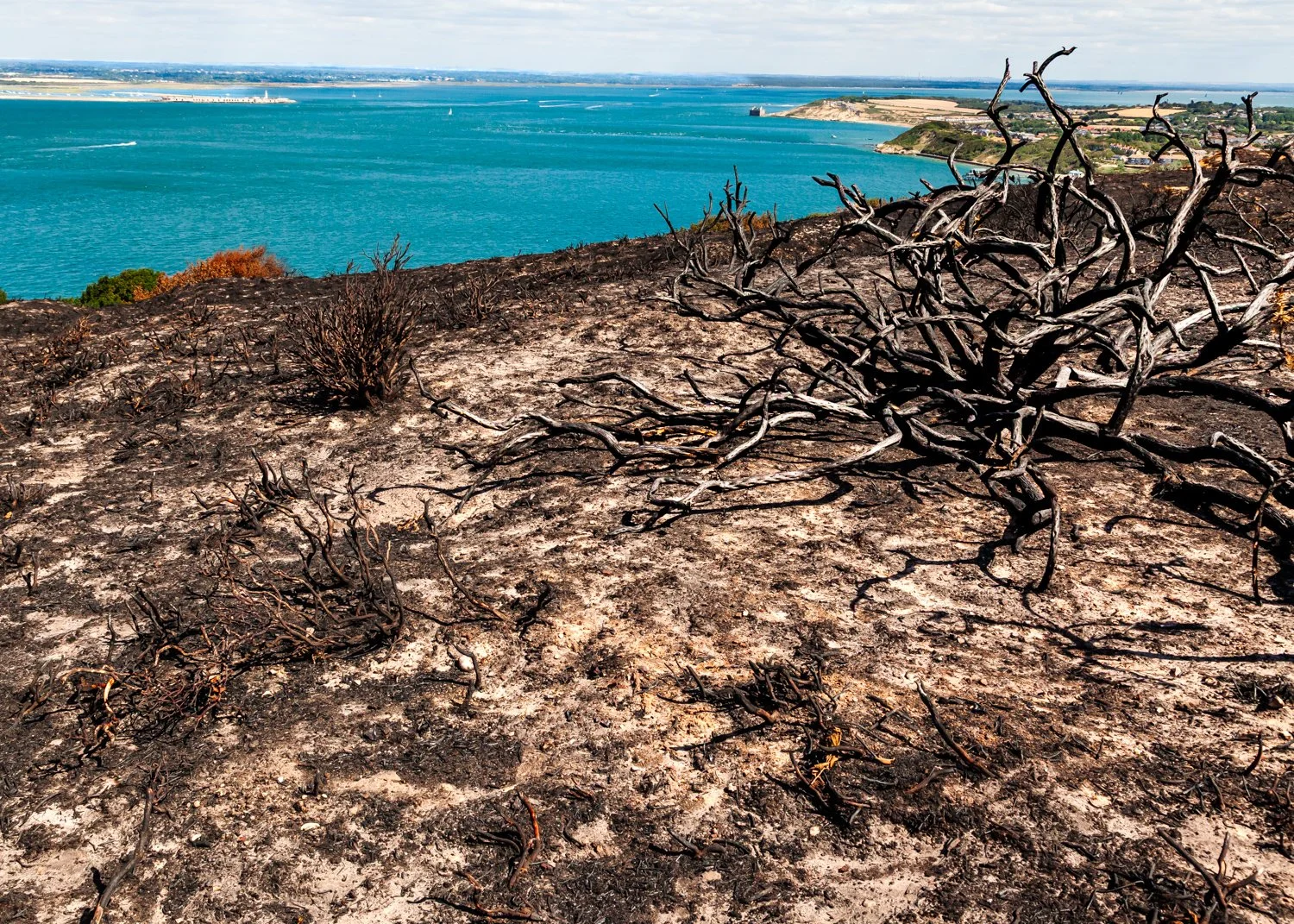
View of the Solent after the fire that burnt 9 plus hectares heathland at Headon Warren. August 2026
Photography © Pete Johnstone.
